
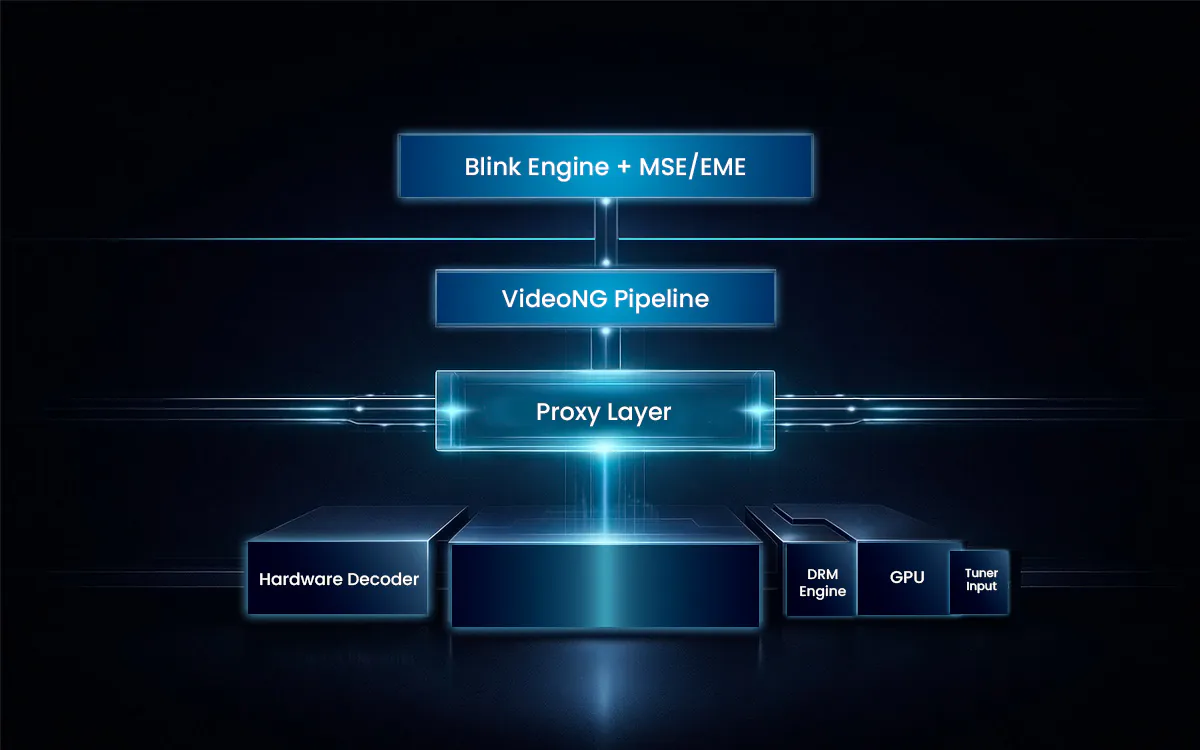
Chromium’s VideoNG media architecture is designed as a modern, modular playback chain that is especially suited to the high-performance demands of modern desktop and mobile web applications. However, when deployed on embedded platforms like smart TVs, set-top boxes (STBs), or automotive environments, the "desktop-first" approach of Chromium’s architecture often conflicts with the proprietary hardware resources or hybrid broadcast demands.
RT-RK possesses the expertise and technical competencies required to successfully integrate a customized, platform-independent audio/video (AV) pipeline into the Chromium browser, leveraging extensive experience in working with complex multimedia and browser architectures. By implementing a custom media backend, full compliance with HTML5 and MSE standards is preserved while enabling direct control over the native embedded players on the target platform.
The Challenge: VideoNG on Embedded Hardware
Chromium has emerged as the accepted standard in the embedded space. The native media stack, called VideoNG, relies on an advanced demux/decode/render pipeline that is designed to function in an environment in which CPU and GPU resources are closely coupled and in which timing is predictable.
Even though this architecture is successful in both PC and Android environments, there are significant challenges to integration in an embedded environment:
- Hardware Opacity: The “black box” proprietary hardware players that dominate the embedded environment control their own decode and render operations. These players do not conform to Chromium's need to control each stage of the pipeline.
- Pipeline constraints: The original Chromium pipeline does not support modern signaling in hybrid TV, and we are bypassing all the limitations inherent in that pipeline.
- Hybrid Complexity: The HbbTV environment is known to require very complex features that include tuner input integration and unique DRM. These features do not align with the standard web-oriented VideoNG stack.
The Solution: A Proxy-Based Architecture
In order to resolve conflicts without compromising web standards, we establish a platform-independent AV pipeline, tailored to the requirements of diverse hardware and software environments. Instead of modifying the hardware player to fit Chromium’s internal pipeline, Chromium is extended with a custom media backend that delegates playback control to the native platform player.
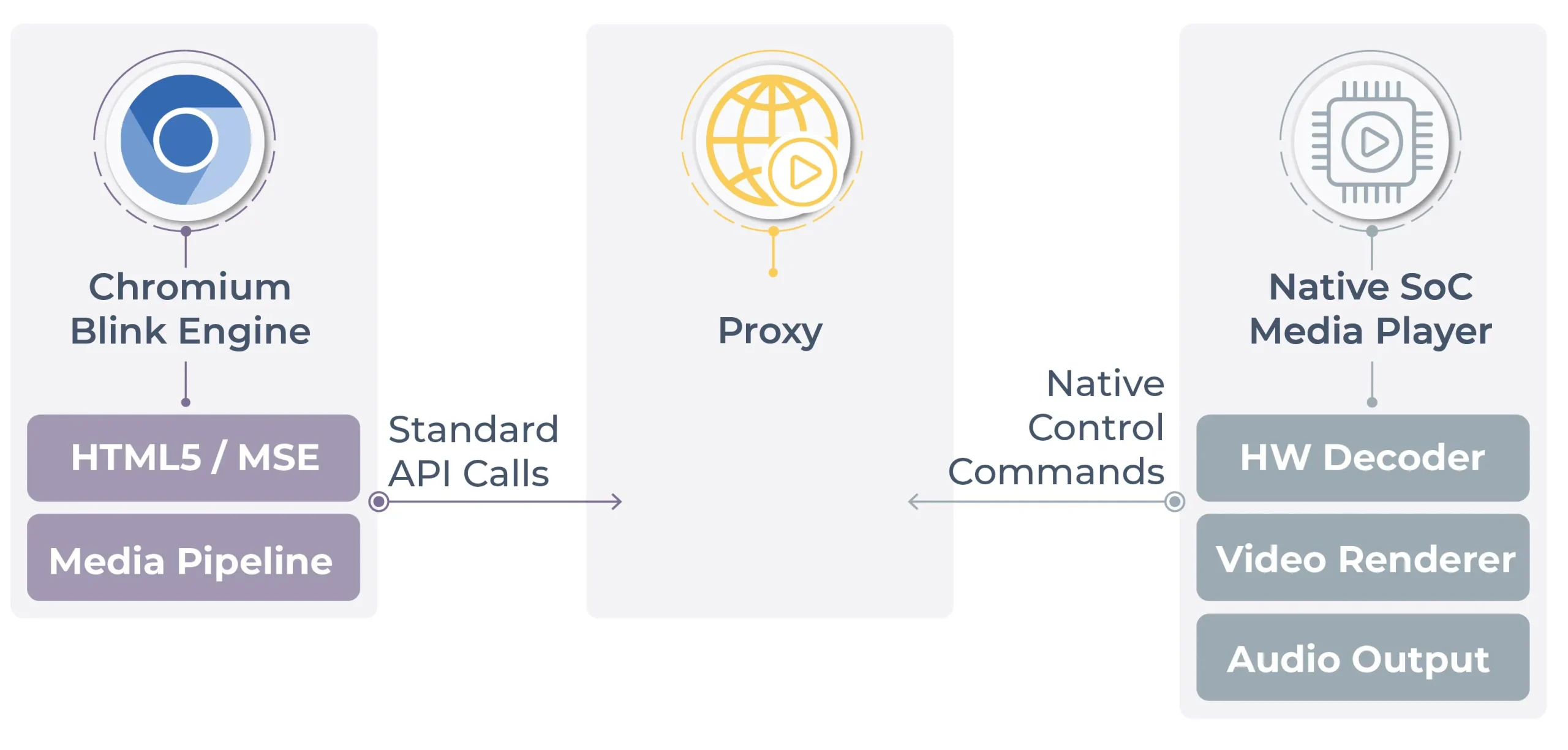
Figure 1. Proxy Layer: Positioned between the Blink engine and the native SoC media player
Command Translation and Event Normalization
This custom implementation acts as an intelligent bridge:
- Command Translation: When a web application invokes media operations such as play() or modifies the currentTime property, the implementation translates these actions into the appropriate native player API calls.
- Event Normalization: Asynchronous events from the native player (e.g., buffering start) are captured and mapped back to standard HTML5 events. This ensures that the web application receives the exact event sequence it expects.
State Machine
To handle hardware variance, the proxy utilizes an internal event-driven state machine. This keeps the logical playback state independent of the hardware. Because the proxy manages the state logic, it can mask hardware characteristics, preventing the browser state from "drifting" and causing application errors.
Critical Feature: Hybrid & Streaming Support (MSE/EME)
One of the common pitfalls in porting an embedded browser is losing support for premium streaming services like YouTube or Netflix. The architectural solution is based on an alternative implementation model, which encompasses the following key steps:
- Retaining the Chromium demuxer: For Media Source Extensions (MSE) streams, Chromium continues to handle container parsing and adaptive streaming logic in JavaScript, as defined by its original architecture.
- Using platform HW decoder: The data is then sent to platform-provided decoder pipeline.
- Efficiency: Redundant software libraries are avoided, and hardware decryption is leveraged where possible.
Strategic Benefits for OEMs
- Accelerated Time-to-Market: Platform-specific code is isolated into a thin Adapter Layer. New chipset integrations can be completed in days, rather than months.
- Performance Optimization: By short-circuiting the deep Chromium render pipeline, lower latency and a significantly reduced memory footprint are achieved.
- Platform Independence: This solution, proven across Linux and Android, allows a “write once, deploy everywhere” maintenance model.
Conclusion
The presented proxy-based approach addresses the fundamental mismatch between modern web standards and legacy hardware. This concept enables abstraction of the application layer from the underlying hardware, providing OEM manufacturers with the capability to implement HbbTV-compliant, high-performance, and streaming-oriented browsers while significantly reducing integration risk.