
After more than 20 years of continuous operation, sustaining the original system was no longer the only objective. Evolving operational requirements, modern security expectations, increased performance demands, and stricter environmental conditions necessitated a fundamental shift - from lifecycle extension to full product re-engineering.
Rather than incrementally modifying the existing platform, the development of a new military-grade system was initiated, preserving the proven functional foundation of the original product while introducing modern architecture designed for the next generation of long-term deployment.
From Legacy Continuity to Clean-Sheet Redesign
The original product had demonstrated exceptional longevity through disciplined lifecycle management. However, decades of operational feedback revealed opportunities for architectural improvement that could not be fully addressed within the constraints of the legacy design.
Key drivers for redesign included:
- New functional and performance requirements
- Increased expectations for reliability and robustness
- Advances in component integration and system architecture
- Stricter environmental and operational conditions
- Long-term availability considerations for future deployments
The result was a clean-sheet development effort, informed by real-world operational experience rather than theoretical assumptions.
Preserving Proven Functionality While Expanding Capabilities
The redesigned system retained the core functional intent of the original product, ensuring continuity for existing operational concepts and users. At the same time, the new platform introduced additional capabilities and improvements enabled by modern hardware and software architectures.
Enhancements included:
- Expanded functional features beyond the original system scope
- Improved performance and resource efficiency
- Updated interfaces and subsystem integration
- Architecture optimized for long-term maintainability and scalability
This balance allowed the new system to remain familiar in purpose while significantly more capable in execution.
Engineering for Harsh Environments - Beyond Legacy Limits
Environmental robustness remained a fundamental requirement, with expanded environmental qualification criteria reflecting updated operational expectations.
The new platform underwent comprehensive environmental testing aligned with military-grade standards, covering:
- Extended temperature extremes
- High-humidity exposure
- Mechanical vibration under operational and transport conditions
- Shock resistance under functional load
Testing was conducted by accredited external laboratories, ensuring independent verification of compliance. Compared to the legacy product, qualification limits were expanded, and acceptance criteria tightened, reflecting the system’s role in more demanding deployment scenarios.
| Test | Method | Level | Mode | ||
|---|---|---|---|---|---|
| MIL 810F | Climate | High Temperature Storage | 501.4, Procedure I | 2h at +85°C | Non-Operational |
| Low Temperature Storage | 502.4, Procedure I | 4h at -40°C | Non-Operational | ||
| High Temperature Operational | 501.4, Procedure II | 2h at +70°C | Operational | ||
| Low Temperature Operational | 502.4, Procedure II | 4h at -20°C | Operational | ||
| Humidity | 507.4 | 5 cycles (total of 10 days), RH 95% at 30°C and 60°C | Non-Operational | ||
| Mechanical | Vibration I | 514.5, Procedure I, Category 24 – General min. integrity exposure | 7.7g rms for 1h per axis | Operational | |
| Vibration II | 514.5, Procedure II – Loose cargo transportation | 300 rpm, circular synchronous mode, 1h | Non-Operational | ||
| Shock | Method 516.5 Procedure I – Functional Shock | 3 shocks of 20g, sawtooth shock pulse, for 15ms in each direction per each axis (total of 18 shocks) | Operational |
Table 1. An Overview of tests, methods, and ranges of expected values for the developed product
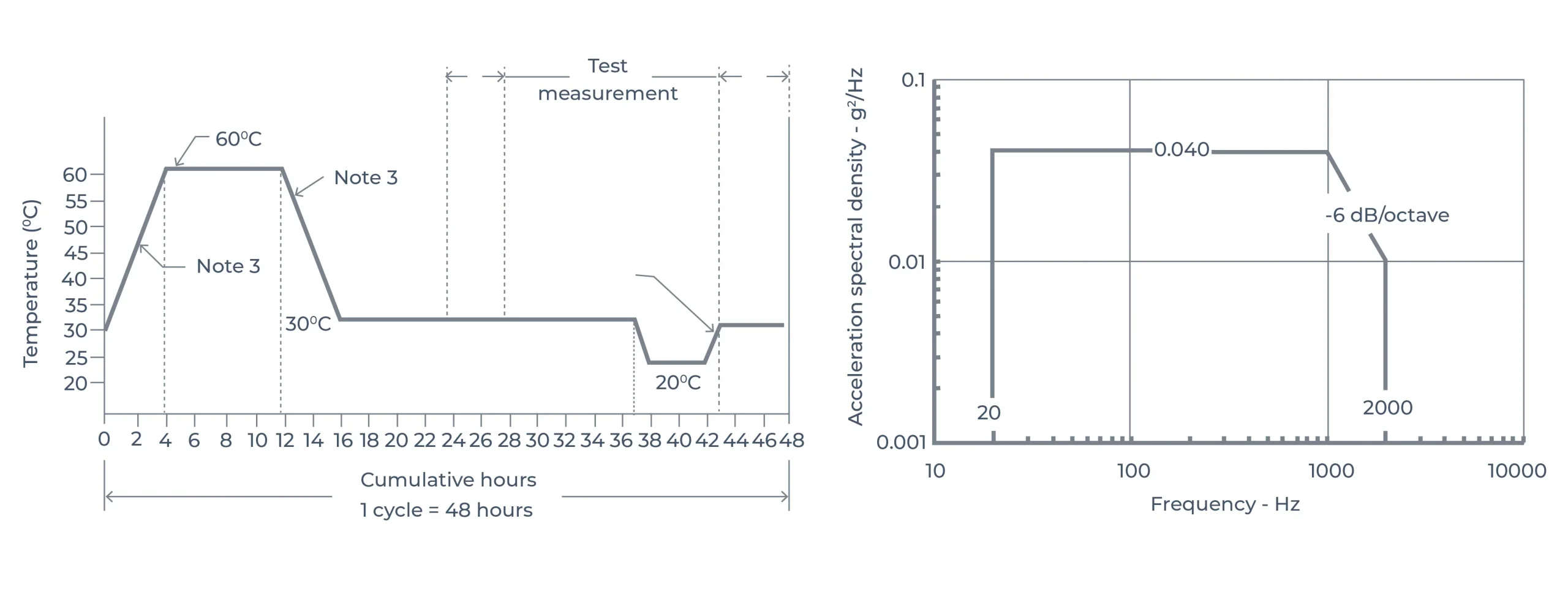
Figure 1. Examples of ambiance profiles from the test plans
Designing for the Next Lifecycle - From Day One
Unlike legacy sustainment, where lifecycle considerations evolve over time, the redesigned system was developed with long-term lifecycle management embedded from the outset.
This included:
- Component selection focused on long-term availability
- Multi-source procurement strategies at design stage
- Clear upgrade and replacement paths for critical subsystems
- Design margins supporting future functional extensions
- Documentation and verification structured for long-term maintenance
The objective was not only to meet current requirements, but to ensure controlled evolution over the system’s next operational decades.
From Experience to Next-Generation Readiness
The development of the new military-grade system represents a transition from maintaining longevity to engineering longevity by design. Two decades of operational insight, obsolescence management, and environmental validation directly informed architectural decisions, risk mitigation strategies, and qualification criteria.
This project demonstrates how long-term operational experience can be transformed into a next-generation platform-one that preserves proven functionality while meeting modern technical, environmental, and lifecycle expectations.