
In the modern IoT industry, challenges are not only technological, but also regulatory and economic. Typical edge IoT devices today are subject to numerous EU Directives and harmonized standards, such as LVD, WEEE, and REACH, whose application and testing ensure safety, reliability, and regulatory compliance. Practice shows that the greater the number of similar products on the market, the higher the level of standardization, and consequently the higher the amount of laboratory testing required. Each change in the legislative framework may trigger additional verification, directly impacting non-recurring engineering (NRE) costs, which often reach significant levels.
Devices powered from the mains supply fall under the scope of the LVD Directive and therefore require extensive testing. Devices powered by batteries are not covered by LVD, but instead by WEEE, REACH, and battery disposal regulations, which represent major cost drivers. In addition, manufacturers are obligated to ensure product conformity throughout the entire lifecycle, meaning that every update of the regulatory framework may require a new round of compliance testing.
Within this context, the RT-RK engineering team developed an innovative solution: an ultra-low-power MBUS IoT device powered by energy harvesting from the interface, eliminating the need for mains connection or batteries.
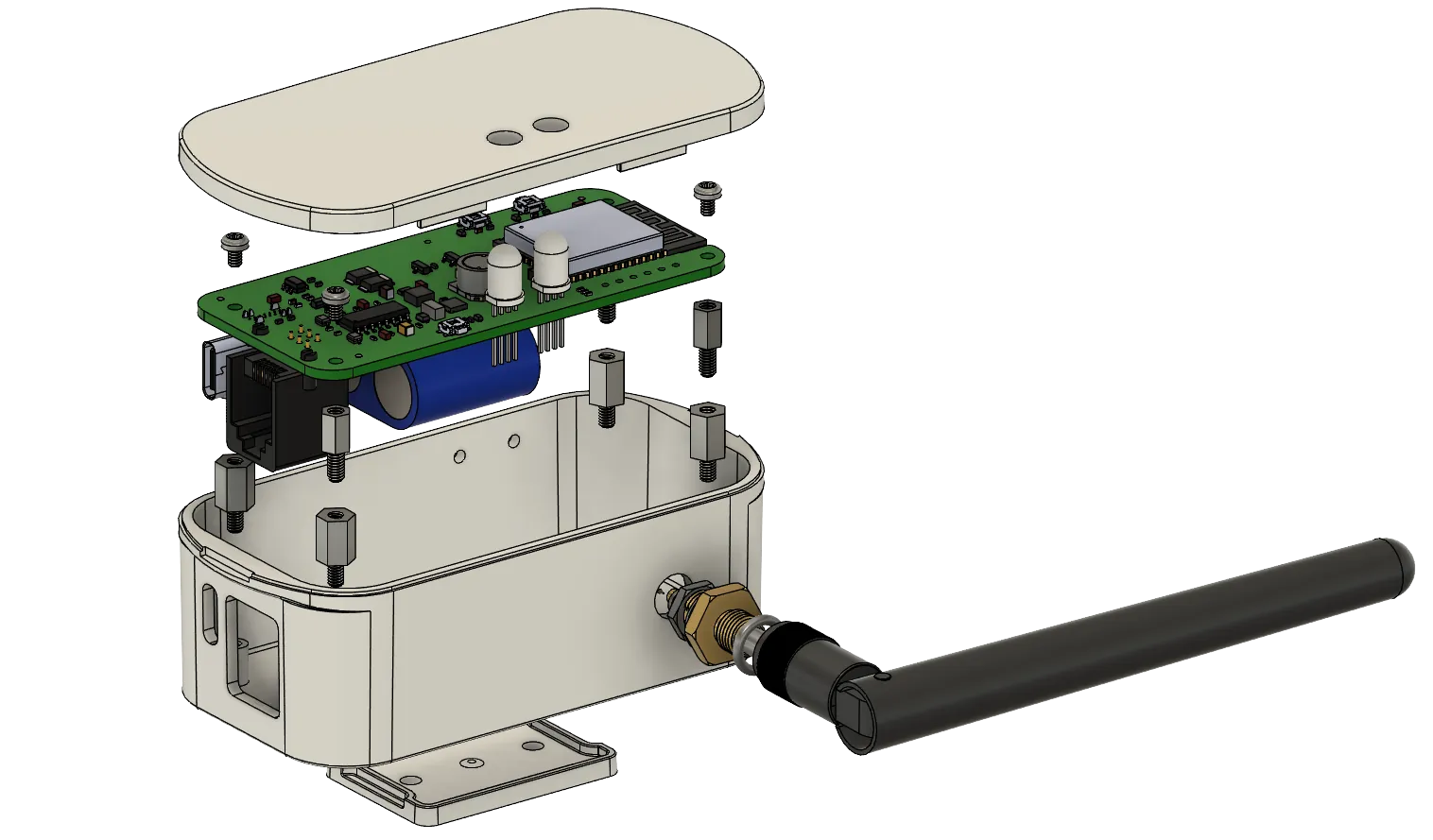
Figure 1. 3D exploded view
Technical solution
By applying precise timing and charging-current control within the limits defined by the MBUS standard, combined with continuous supercapacitor charge monitoring, implementation of a dedicated state-machine architecture, and extensive use of power-down modes of on-board ICs, RT-RK developed a device that operates efficiently and reliably, comparable to systems using standard power-supply topologies and conventional energy sources.
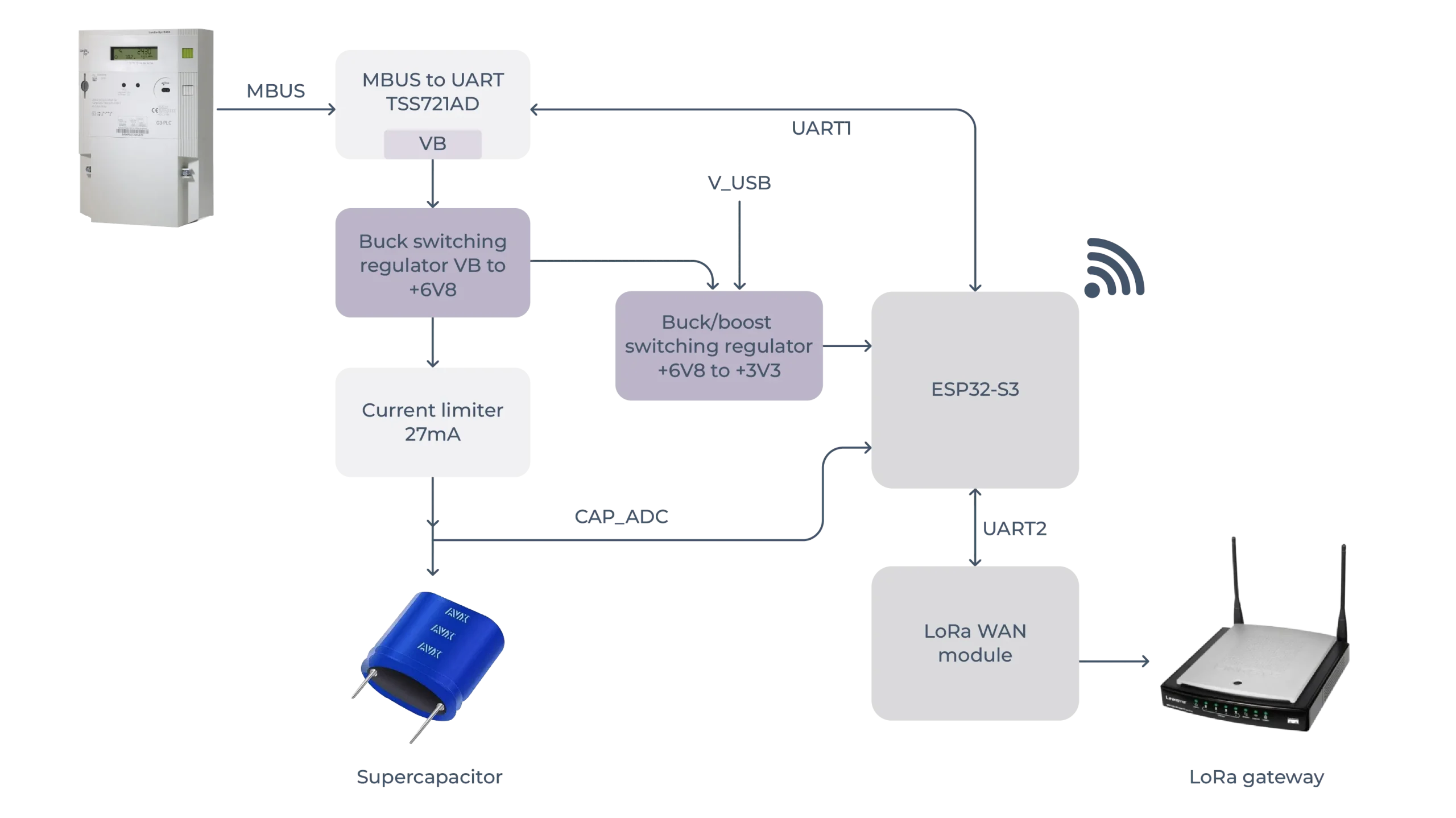
Figure 2. Solution Architecture
Additional electronic and mechanical optimization, together with the use of pre-certified radio modules, demonstrates how smart engineering design choices enable control of total lifecycle costs while maintaining high performance and system reliability—exactly in line with our customers’ requirements.
The wireless interface is activated only when sufficient energy has been accumulated in the supercapacitor. Once the predefined energy threshold is reached, the device briefly enables the Wi-Fi module, transmits the collected measurement data to the cloud, and then returns to ultra-low-power operation. This duty-cycled connectivity approach ensures reliable remote data delivery while preserving the energy-harvesting power budget.
Experimental verification
The functionality of the energy-harvesting-based system was confirmed through practical measurements in a real environment. As part of the validation process, the supercapacitor charging behavior was observed while the device’s main controller was operating in light sleep mode.
Test 1 – Supercapacitor Charging Graph from empty to full while devices is in “light sleep” mode
- Initial voltage: 0.791 V
- Fully charged supercapacitor voltage: 4.804 V
- Measurement start time: 11:16:20
- Measurement end time: 11:52:54
- Total charging time: 36 min 42 s
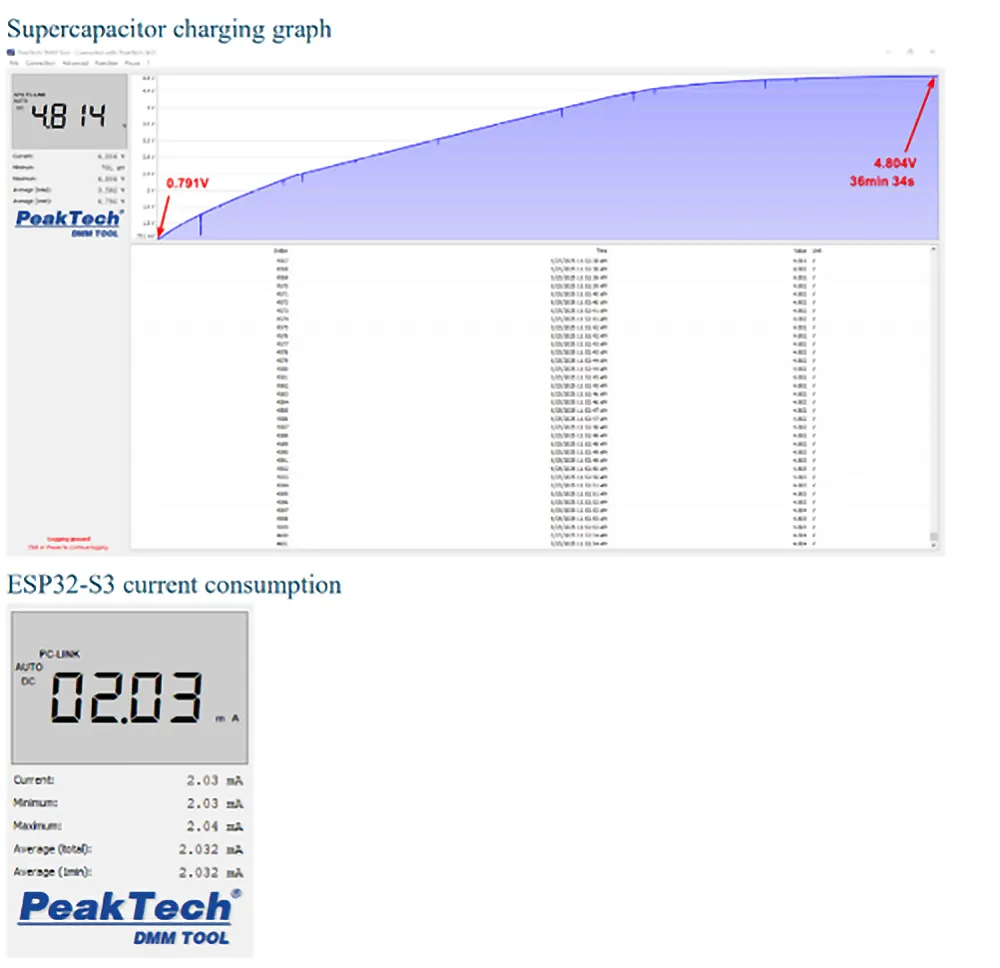
Figure 3. Supercapacitor Charging and Device Current Consumption
The results demonstrate that stable system operation can be achieved exclusively using energy harvested from the interface, while maintaining ultra-low power consumption of the main processor.
Benefits
- Elimination of mains connection and batteries
- Ultra-low power consumption
- Efficient energy harvesting from available interfaces
- Reduced NRE costs and easier long-term market sustainability
- Compliance with relevant EU standards and Directives
This project represents a clear example of how smart engineering solutions can balance technical performance with economic sustainability, delivering products that are reliable, long-lasting, and easy to maintain throughout their lifecycle.